
Why Media Relations Still Matters: A Friendly Field Guide for Modern PR
Overview
Media relations sits at the heart of public relations (PR) because it connects your story to the audiences who trust journalists, editors, and credible outlets. When you build real relationships with the press, you don’t just “get hits”—you earn visibility, third‑party validation, and momentum that compounds over time. In this friendly guide, I’ll explain what media relations is, why it still matters, and how to do it well without burning bridges (or inboxes).
What Exactly Is Media Relations?
Think of media relations as the everyday practice of working with the press—journalists, editors, producers, podcast hosts, newsletter writers—to share useful, accurate information that helps them tell better stories. It’s a core pillar of PR, but it’s not the entire house.
- Public relations: The bigger strategy—reputation, relationships, messaging, stakeholder trust.
- Media relations: The hands‑on craft—connecting with reporters and outlets to earn coverage.
Key responsibilities I keep front and center:
- Pitching stories, experts, data, and announcements that are actually newsworthy
- Providing accurate, timely information (on deadline, every time)
- Understanding what a reporter needs to make a strong story
- Nurturing long‑term relationships so the next opportunity is easier than the last
And here’s how it fits with the rest of the media mix:
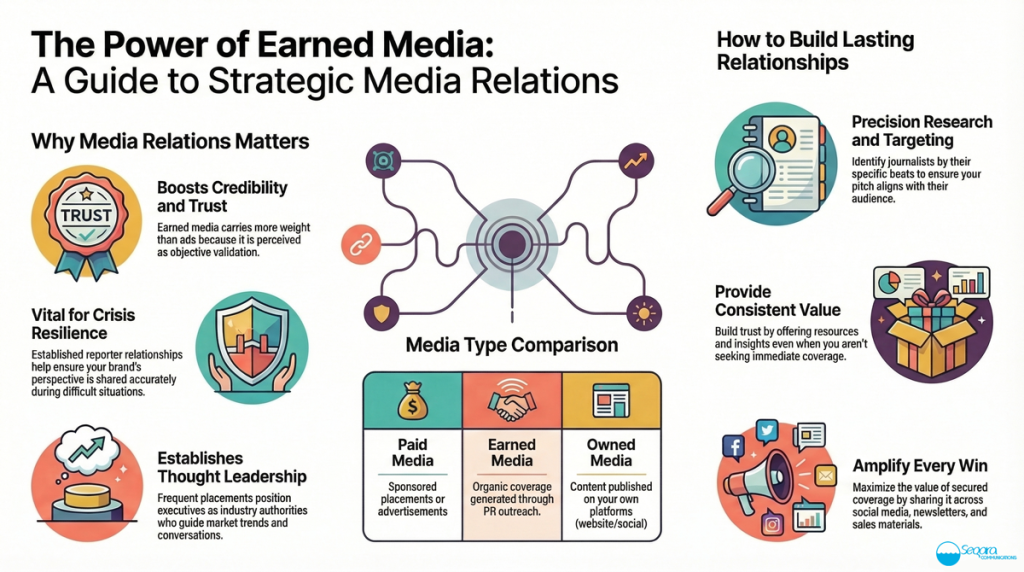
- Paid media: Ads and sponsored placements you buy
- Earned media: Coverage you don’t pay for—won by relevance and relationships
- Owned media: Content you control—your website, blog, newsletter, and social channels
Media relations focuses on earned media—the kind audiences tend to trust most because a third party did the vetting.
Why Media Relations Still Matters
1) Visibility with credibility
Coverage introduces you to new audiences and comes with built‑in trust. A respected outlet saying “this matters” lands differently than an ad ever will.
2) Familiarity that compounds into trust
Show up consistently with clear, accurate information, and people begin to rely on you. That trust becomes brand equity.
3) Narrative influence
The media helps shape how the public understands your brand. Positive stories accelerate launches; thoughtful context steadies the ship during change.
4) Traffic and engagement
Good coverage sparks searches, referral traffic, and downstream engagement on your owned channels.
5) Crisis readiness
In tough moments, existing relationships mean your perspective is heard quickly and fairly.
6) Thought leadership
Placing execs and experts in authoritative outlets builds authority that guides industry conversations over time.
How Pros Build and Maintain Real Relationships
Research first, pitch second
Great media work starts with a tight list. Understand each reporter’s beat, audience, and formats. The goal isn’t to pitch everyone—it’s to pitch the right someone.
Craft pitches journalists actually want
Keep it timely, concise, and tailored. Lead with the news, add a stat or expert take, and make the angle clear for their audience. Fewer words, sharper point.
Be useful beyond the ask
Check in with value—data tidbits, perspective, or a quick sanity check on a trend. Respect deadlines like they’re sacred.
Follow up like a pro
One thoughtful nudge is fine. Two if the news is truly time‑sensitive. Then let it go. When a story lands, say thank you.
Building a Smart Media Relations Strategy
Set goals you can measure
Examples: increase awareness, support a launch, shape perception, influence investors, or drive qualified leads.
Know who you’re trying to reach
Audience clarity dictates outlet priority, message tone, and timing.
Use monitoring and listening tools
Track coverage, sentiment, share of voice, and new opportunities. Use what you learn to sharpen your angles and timing.
Prepare for the “uh‑oh” moments
Have messaging frameworks, trained spokespeople, and rapid‑response protocols. In a crisis, minutes matter.
Amplify what you earn
Don’t let great coverage live and die on publication day. Repurpose via social, newsletters, your press page, sales collateral, and investor notes.
Measure what matters
Look at impressions, referral traffic, backlinks, engagement, sentiment shifts, and pipeline impact. Then iterate.
Practical Tips and Mini‑Playbooks
- Build a living media list: beats, last 3 stories, preferred contact method, deadlines.
- Write subject lines like headlines: specific, angle‑forward, 7–10 words.
- Offer assets upfront: quotes, data snippets, product visuals, and availability windows.
- Time your outreach: avoid late Fridays; mind time zones and embargoes.
- Keep your experts media‑ready: clear sound bites, proof points, and stories.
- Log every interaction: what landed, what didn’t, and why.
Common Pitfalls (And How I Avoid Them)
- Spray‑and‑pray outreach: I keep lists tight and angles tighter.
- Hype without substance: I bring data, customer stories, or third‑party validation.
- Slow approvals: I pre‑clear quotes and facts so I can respond fast.
- Ghosting after coverage: I always close the loop with gratitude and next‑step ideas.
The Takeaway
Media relations is a long game built on trust, consistency, and empathy for the newsroom. Invest in genuine relationships, and your brand earns more than mentions—it earns belief. Do the unglamorous parts well, and the headlines tend to follow.

Writer: Aditya Wardhana