
What Are Communication Skills? A Simple Guide to Mastering Them
Communication is woven into nearly every moment of our lives. When we think about the definition of communication skills, it is essential to recognize that communication happens in many different ways and across many different contexts. From writing and speaking to subtle shifts in body language, we draw on a wide range of skills to convey and obtain information. Yet demonstrating strong communication skills is about far more than simply talking or typing—it is about being able to convey information to others in a way that is simple, clear, and free of ambiguity.
At its core, effective communication involves distributing messages clearly and concisely, in a manner that genuinely connects with the audience. Whether you are understanding instructions, acquiring new skills, making requests, asking questions, or relaying information with ease, the ability to communicate well shapes how effectively you operate in both personal and professional settings. In fact, good communication skills are perhaps the most basic skills you can possess as an employee—yet they remain among the most sought-after by employers. Good communication involves understanding requests, asking the right questions, and relaying key information accurately and promptly.
Why Communication Skills Are Important in the Workplace
Communication skills are essential no matter what job you do or what level of seniority you hold. When communication breaks down, the consequences ripple outward: efficiency drops, morale suffers, and objectives become harder to reach. A single misunderstood instruction can derail a project, while a poorly worded email can damage relationships and trust.
In today’s competitive jobs market, communication skills in the business world are highly sought after. Recruiters actively look for candidates who can communicate information effectively, negotiate confidently, and deal with customers with composure and clarity. The ability to listen carefully, speak clearly, and put others at ease has become a highly valuable attribute—one that often distinguishes standout employees from the rest. Employers understand that technical expertise alone is rarely enough; an employee who can also communicate well amplifies the value of every other skill they bring to the table.
The 4 Types of Communication Skills
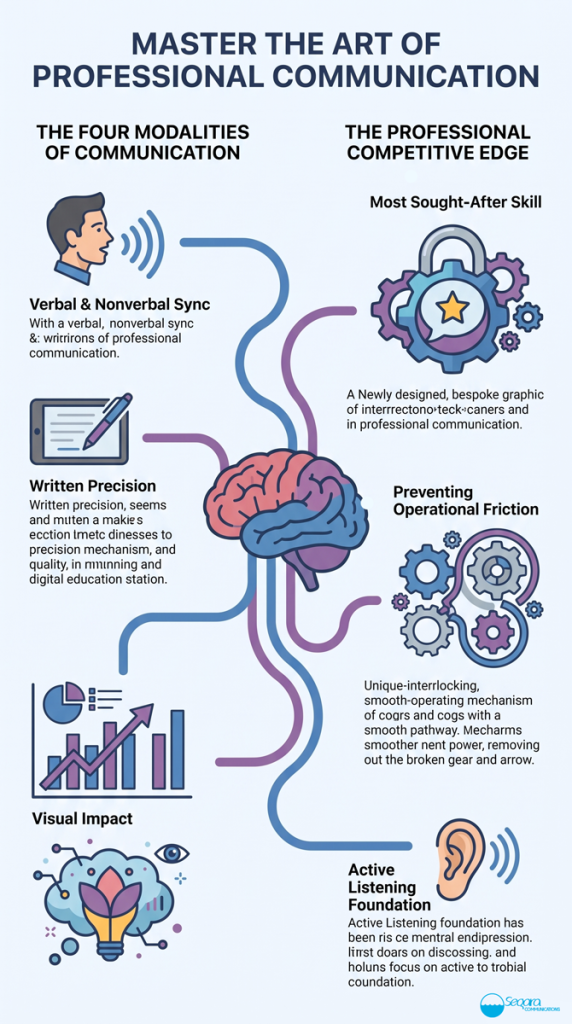
Effective communication is a multifaceted skill set that underpins successful interaction and comprehension. In today’s interconnected world, mastering the four types of communication skills is essential for fostering meaningful connections, promoting understanding, and ensuring that your messages resonate with genuine impact. These communication skills can be organized into four fundamental types, each playing a crucial role in conveying messages and ideas.
1. Verbal Communication Skills
Verbal communication skills involve using spoken language to articulate thoughts, feelings, and concepts. This category encompasses conversations, speeches, presentations, and dialogues, and it relies heavily on the nuances of tone, pitch, and articulation to convey emotions and meaning. A well-delivered verbal message can inspire, persuade, or clarify, while a poorly chosen word or an unintended tone can create confusion or offense. Strong verbal communicators know how to adapt their language to their audience, choose words with intention, and speak with clarity and confidence.
2. Nonverbal Communication Skills
Nonverbal communication skills rely on body language, facial expressions, gestures, and tone of voice to complement and enhance spoken messages. Often, these subtle cues speak louder than words. A reassuring smile, steady eye contact, or an open posture can amplify a message, while crossed arms, averted eyes, or a flat tone can silently contradict it. Nonverbal signals provide deeper insights into the speaker’s intentions and emotions, and skilled communicators learn to read these cues in others while managing their own to ensure consistency between what they say and how they say it.
3. Written Communication Skills
Written communication harnesses the written word, symbols, and numerical data to convey complex ideas with precision and clarity. It includes emails, reports, articles, and other written documents that require careful structuring and deliberate language choice to communicate information effectively. Because written communication lacks the immediate feedback of face-to-face interaction, it demands extra attention to tone, grammar, and organization. A clear, well-structured email or report can prevent misunderstandings, document important decisions, and serve as a lasting reference—making written skills indispensable in nearly every modern role.
4. Visual Communication Skills
Visual communication skills leverage images, photographs, art, diagrams, charts, and graphs to convey information quickly and effectively. This approach appeals to our visual senses, making complex concepts more understandable and engaging for a wide range of audiences. In an era of information overload, a single well-designed chart or infographic can communicate what paragraphs of text cannot. Visual communication is especially powerful in presentations, reports, and training materials, where distilling dense data into clear visuals helps audiences grasp key points at a glance.
Developing Your Communication Skills
Improving communication skills is not a one-time achievement but an ongoing practice. Active listening is the foundation—truly hearing what others say before formulating a response builds trust and prevents errors. Pair this with empathy, which allows you to consider the recipient’s perspective and tailor your message accordingly. Clarity and conciseness are equally vital: eliminate unnecessary jargon, get to the point, and confirm understanding when the stakes are high.
Finally, seek feedback regularly. Whether through colleagues, mentors, or self-reflection, understanding how your messages are received is the surest path to growth. By deliberately cultivating verbal, nonverbal, written, and visual skills, you equip yourself to communicate with confidence, build stronger relationships, and achieve your goals with far greater ease.