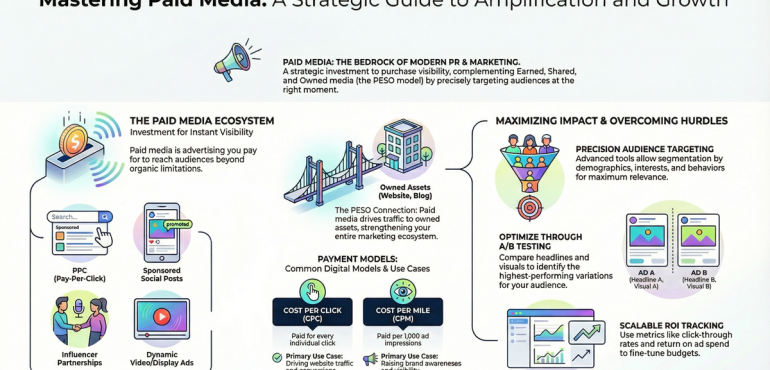

Strategic Framework for Multi-Channel Paid Media Integration
1. The Evolution of Paid Media: From Traditional to Digital-First
The transition from legacy advertising models to a digital-first environment represents a fundamental shift in how organizations maintain market relevance. Historically, advertising relied on a “broadcast” approach, pushing generic messages to a broad audience. In contrast, modern strategic necessity dictates a move toward behavior-based targeting. This evolution allows brands to bypass the noise of the “mushrooming” media landscape, ensuring that messaging is no longer a static interruption but a dynamic response to the active needs of the consumer.
The following table contrasts the characteristics of traditional advertising with the diverse capabilities of modern digital paid media:
| Feature | Traditional Advertising | Modern Digital Paid Media |
|---|---|---|
| Primary Channels | TV, Radio, Billboards | Programmatic, Native, Re-marking |
| Targeting Method | Demographic Broadcasting | Tailored toward behaviors and preferences of end-users |
| Delivery Model | Fixed placements and schedules | Dynamic, automated, and data-driven |
| User Experience | Interruption-based | Integrated, context-aware, and value-driven |
This transformation has fundamentally altered campaign architecture. By focusing on the “behaviors and preferences of end-users,” organizations can move beyond the limitations of organic reach to achieve precise, scalable outreach. This shift necessitates a sophisticated, integrated approach where paid media is not an isolated tactic but a core component of a broader communications ecosystem.
——————————————————————————–
2. The Integrated Ecosystem: Defining Paid Media within the PESO Model
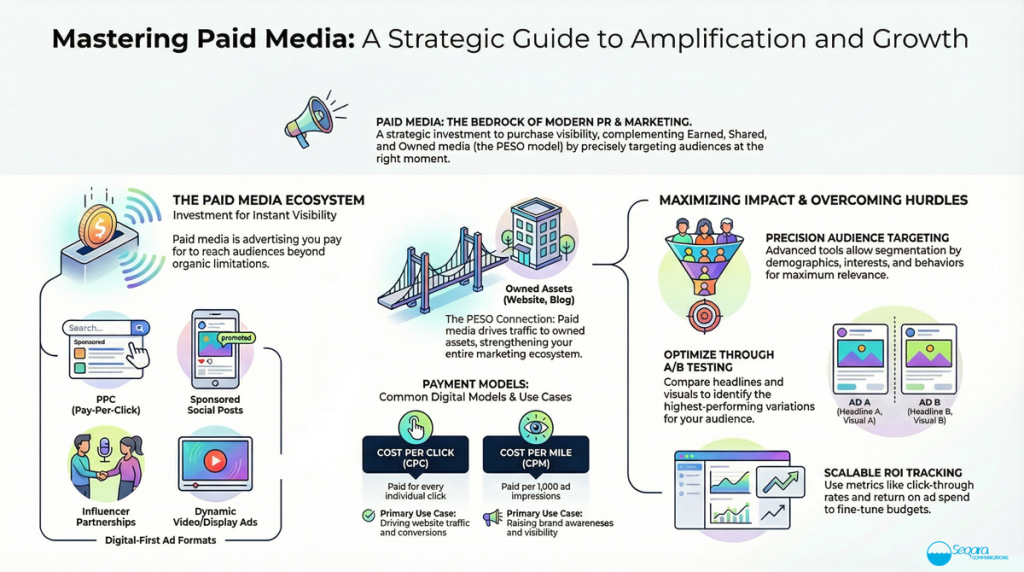
For the modern strategist, the PESO model (Paid, Earned, Shared, Owned) serves as the definitive framework for holistic brand visibility. Within this model, paid media acts as the “bedrock.” While earned and shared media rely on the unpredictability of third-party interest or community participation, paid media provides the guaranteed placement and messaging control required to anchor a brand’s presence in competitive markets.
The unique value of paid media is best understood through its relationship with the other three pillars:
- Paid vs. Earned: Paid media requires direct investment to guarantee visibility, whereas earned media consists of naturally occurring publicity such as press coverage and reviews.
- The “So What?”: Paid media acts as a catalyst, amplifying the reach of organic press wins and ensuring that valuable third-party endorsements are seen by a significantly wider audience.
- Paid vs. Shared: Shared media centers on social interaction and community-driven content.
- The “So What?”: Paid media supports shared efforts by promoting consumer-created content, pushing community-driven narratives beyond the brand’s immediate social circle.
- Paid vs. Owned: Owned media includes assets fully controlled by the brand, such as websites and blogs.
- The “So What?”: Paid media serves as the primary traffic driver for owned assets, converting external visibility into sustainable, direct communication channels that the brand owns long-term.
Strategic integration requires a clear understanding that “Paid Media” is defined by the requirement of direct investment. This investment allows brands to bypass organic constraints and reach target demographics with a level of precision that other media types cannot replicate. By viewing these vehicles not as separate silos but as a unified portfolio, organizations can ensure that every paid impression strengthens the entire PESO ecosystem.
——————————————————————————–
3. Core Pillars of the Digital Paid Media Portfolio
A high-performing digital portfolio utilizes a diverse range of paid vehicles, each selected to align with specific audience preferences and stages of the buyer journey.
Pay-Per-Click (PPC)
PPC is a model where advertisers pay only for active user engagement. This is typically executed on search platforms like Google Ads, where brands bid on specific keywords related to their offerings.
- Cost Models: Advertisers select between Cost Per Click (CPC), paying for individual interactions, or Cost Per Mile (CPM), which focuses on the price per thousand impressions for display and native ads.
- Strategic Impact: PPC captures high-intent users at the exact moment of search, providing immediate visibility for specific product or service queries.
Sponsored Social Media
This involves paying platforms like Facebook, Instagram, or LinkedIn to insert content directly into user feeds, labeled as “sponsored” or “promoted.” These posts support various creative formats including images, carousels, videos, and interactive formats.
- Professional Targeting Example: A tech startup promoting a whitepaper to industry peers might utilize LinkedIn ads to target specific job titles and sectors, ensuring high-value content reaches those most likely to engage.
- Strategic Impact: Sponsored social leverages deep behavioral data to place a brand within the natural social flow of the target demographic.
Influencer Partnerships
Brands partner with individuals who possess authority and a significant following within a specific niche.
- Strategic Impact: This method leverages established “audience trust” and “storytelling” to drive engagement and sales through a credible third-party voice.
Display, Video, and Text Ads
These formats focus on visual impact and high-frequency messaging.
- Display Advertising: Visual banner ads placed on webpages to raise awareness or retarget visitors. For example, a news site might display a retargeted ad from an e-commerce retailer to a user who viewed products but did not complete a purchase.
- Video Ads: Dynamic, moving clippings that autoplay to capture attention more effectively than static images.
- Text Ads: Concise, text-only messages primarily used in search engine results for targeted, direct communication.
- Strategic Impact: These formats are essential for building brand recognition and maintaining “top of mind” awareness through persistent visual reminders.
Sponsored Content
This includes guest posts or blogs on third-party websites designed to feel “organic.”
- Strategic Impact: By fitting seamlessly into a host platform, sponsored content informs and entertains the audience, promoting the brand without the friction of traditional advertising.
——————————————————————————–
4. Strategic Value Propositions of Paid Media Investment
Executive stakeholders must view paid media as a scalable investment that provides absolute control over how, where, and when a brand’s message is delivered.
- Amplifying Reach and Visibility: Paid media extends a brand’s presence well beyond the shrinking limits of organic algorithms.
- Managerial Insight: This solves the bottleneck of market “invisibility.” In saturated markets, this visibility conveys a sense of relevance and ensures the brand remains a viable option during the consumer’s evaluation phase.
- Precise Audience Targeting: Advanced tools allow for segmentation by demographics, interests, location, and specific behaviors.
- Managerial Insight: Precision targeting minimizes “ad waste,” ensuring that capital is deployed exclusively toward segments with the highest propensity for conversion.
- Measurable ROI Tracking: Digital platforms provide granular data, including Click-Through Rate (CTR) and Return on Ad Spend (ROAS).
- Managerial Insight: For e-commerce leaders, this data identifies exactly which keywords and creatives are converting, allowing for the real-time reallocation of budgets from low-performing to high-performing assets.
- Scalable and Fast Impact: Campaigns can be launched quickly to meet time-sensitive objectives.
- Managerial Insight: This is a critical lever for product launches—such as a tech startup creating immediate buzz—where driving thousands of visitors in a matter of days is vital for early-stage momentum.
- Cross-Channel Presence: Paid media ensures a brand engages with unique user demographics across different platforms.
- Managerial Insight: Multi-channel integration is not just about reach; it is about meeting different audience segments where they specifically live (e.g., professional segments on LinkedIn vs. social segments on Instagram), creating a cohesive and ubiquitous brand experience.
——————————————————————————–
5. Navigating Implementation Barriers and Market Friction
Success in the digital marketplace requires a proactive strategy to mitigate economic and psychological barriers that can impede long-term campaign performance.
- Cost Dynamics: In highly competitive industries, the demand for top-tier placements can rapidly escalate costs.
- The “So What?”: High competition can quickly exhaust budgets. Smaller players must strategically niche their targeting to avoid being outbid by larger organizations for high-volume keywords.
- Consumer Ad Fatigue: The modern consumer often suffers from “banner blindness” due to the volume of daily digital advertisements.
- The “So What?”: As users learn to ignore repetitive imagery, campaign effectiveness naturally decays, necessitating constant creative refreshment to maintain engagement rates.
- Market Saturation: The low barrier to entry for digital ads has increased the volume of brands competing for the same “eyeballs.”
- The “So What?”: Increased demand raises the pricing floor for premium placements, requiring brands to demonstrate higher value and better creative to stand out.
- Platform Dependency: Paid media strategies are subject to the internal rules of platform owners.
- The “So What?”: Sudden algorithm shifts or policy changes can disrupt performance. Furthermore, brands face the risk of unexpected bans for failing to meet evolving platform requirements, which can instantaneously erase a brand’s digital visibility.
——————————————————————————–
6. Tactical Optimization and Continuous Improvement Framework
A sophisticated paid media strategy is dynamic, requiring an iterative process of refinement based on real-time performance data and shifting consumer sentiment.
Best Practices Checklist
- Optimize Targeting: Leverage advanced segmentation tools (Google, Facebook, LinkedIn) to focus on behaviors and interests, minimizing waste and maximizing resonance.
- Execute A/B Testing: Systematically compare headlines, visuals, CTAs, and formats to identify the specific combinations that drive the highest response.
- Implement Retargeting: Use audience data to re-engage users who have previously interacted with the brand—such as those who abandoned a cart—to keep the brand top of mind.
- Monitor and Pivot: Treat no campaign as static. Continuously track performance metrics and shift budgets immediately away from underperforming creatives to optimize ROI.
- Prioritize Compelling Design: Ensure all ads are eye-catching and actionable. Use storytelling to demonstrate how a product solves a specific user problem, facilitating a deeper connection and higher conversion.
Summary: Mastering paid media requires a transition from isolated tactical spend to an integrated, multi-channel strategy. By grounding investment in the PESO model and prioritizing continuous data-driven optimization, organizations can achieve sustained brand recognition and measurable growth in an increasingly saturated digital ecosystem.
Writer: Aditya Wardhana