
Taxonomy SEO: A Practical Guide to Organizing Content for Users and Search
Overview
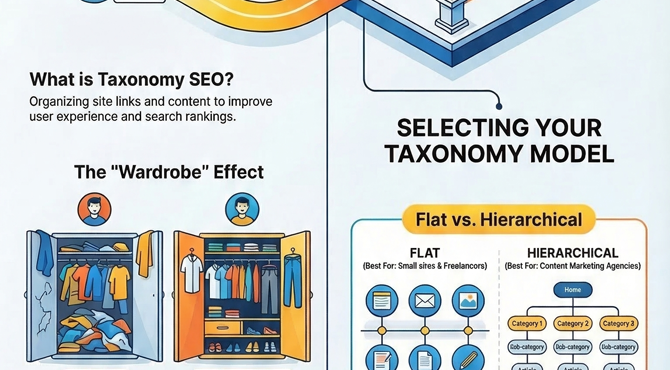
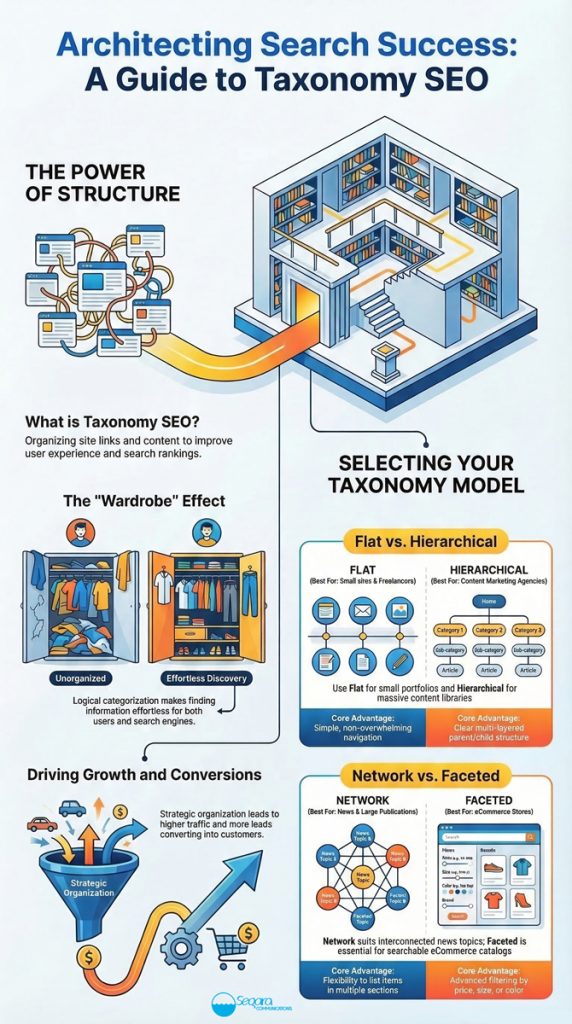
When I talk about Taxonomy SEO, I’m really talking about the art and science of organizing a website so people and search engines can immediately understand it. It’s the practice of structuring links, pages, and content into clear, meaningful groups so visitors find what they need faster—and rankings benefit as a result. Think of it like labeling the shelves in your wardrobe: tops here, pants there, accessories in their own spot. The moment everything is labeled, life gets easier.
At a practical level, taxonomy work includes:
- Designing a clear hierarchy
- Grouping related content
- Standardizing URL patterns
- Building smart internal links
- Writing descriptive, relevant titles
Done well, taxonomy SEO unlocks:
- A more intuitive user experience
- Cleaner content analytics and reporting
- Improved visibility in search results
- Higher conversion rates from better navigation
- A tidier publishing workflow for your team
Why It Matters
SEO success isn’t just about keywords and backlinks. If your site’s structure is confusing, users bounce and crawlers get lost. A thoughtful taxonomy helps visitors move confidently through your site, signals topical relationships to search engines, and clarifies which pages are most important. Over time, that clarity compounds into more relevant traffic, stronger engagement metrics, and healthier growth.
In simple terms: better structure → better experience → better rankings and revenue.
Core Taxonomy Types (and When to Use Them)
There isn’t a single “right” taxonomy for every website. Choose the model that fits your content scale, user needs, and business goals. Here are the four primary patterns I reach for.
1) Flat Taxonomy
A flat taxonomy keeps everything at one level—no subpages, no deep nesting. Navigation lists top-level sections only.
- Best for: Small sites that don’t need depth
- Example use cases: Freelancers, small portfolios, simple brochure sites
- Pros: Minimal cognitive load, fast exploration, easy maintenance
- Watchouts: Limited scalability; can become cluttered as content grows
2) Hierarchical Taxonomy
This multi-layer system organizes content into parent categories and subcategories. Think “Category > Subcategory > Detail Page.”
- Best for: Medium-to-large sites with multiple offerings or content libraries
- Example use cases: Agencies with service pages, robust blogs, case studies, industry pages, careers
- Pros: Clear information architecture, stronger topical silos, straightforward breadcrumbs
- Watchouts: Too many layers can bury content; requires governance
3) Network Taxonomy
Here, content connects across categories based on relationships—one item can live in multiple clusters. It’s ideal when topics overlap and you want to promote discovery.
- Best for: High-volume publishers and news sites
- Example use cases: Articles tagged to multiple beats or themes
- Pros: Flexible cross-linking, richer discovery paths, improved session depth
- Watchouts: Tag bloat and duplicate paths can cause crawl inefficiencies
4) Faceted Taxonomy
Content is organized by multiple attributes (facets) like price, color, size, brand, or topic filters. Users can combine facets to narrow results.
- Best for: Ecommerce and large catalogs
- Example use cases: Product filtering by attributes; resource libraries with filters
- Pros: Highly personalized navigation, faster product discovery, better conversion
- Watchouts: Facet SEO hazards (crawl traps, thin combinations) require technical controls
How to Build a Strong Taxonomy SEO Strategy
- Map intent first: Identify your core user journeys. What do users want to accomplish in 1–3 clicks? Sketch flows before choosing a structure.
- Audit content: Inventory every URL. Note duplicates, orphans, and thin pages. Group by topic, intent stage, and performance.
- Choose the model: Pick flat, hierarchical, network, faceted—or a hybrid—based on content scale and UX needs.
- Define naming rules: Standardize category labels, slugs, and title patterns. Aim for clarity over cleverness.
- Design URLs: Keep them readable and predictable (e.g., /category/subcategory/item). Avoid unnecessary parameters.
- Plan internal links: Use hubs, collections, and related links to reinforce topical relationships.
- Implement navigation: Menus, breadcrumbs, and on-page modules should reflect the chosen taxonomy exactly.
- Control crawl: Use robots rules, canonical tags, and noindex on low-value facets to prevent crawl waste.
- Measure and iterate: Track findability (click depth, search refinements), engagement, and conversions by section.
Technical Considerations
- Breadcrumbs: Surface the hierarchy and add structured data for rich results.
- Pagination: Consolidate signals with rel=”next/prev” patterns (or modern equivalents) and canonicalization.
- Canonicals: Deduplicate network and faceted pages that present similar content.
- Sitemaps: Generate by category and keep them under URL and size limits.
- Filters and facets: Whitelist indexable combinations; block the rest via robots.txt, noindex, or parameter handling.
- Internal link depth: Keep key pages within 3 clicks of the homepage.
- Performance: Fast pages amplify UX and crawl efficiency; watch Core Web Vitals.
Common Mistakes to Avoid
- Mixing naming conventions or overlapping categories
- Over-nesting (burying content deeper than necessary)
- Letting tags balloon without governance
- Duplicating pages across categories without canonical logic
- Creating infinite crawl spaces with uncontrolled filters
- Ignoring analytics by taxonomy segment
Quick Checklist
- Do users find top tasks in ≤3 clicks?
- Are category labels unambiguous and consistent?
- Is each URL exactly where users expect it to be?
- Are breadcrumbs, sitemaps, and internal links aligned?
- Are low-value facet combinations blocked from indexing?
- Does each category have a clear purpose and owner?
Wrapping Up
Taxonomy SEO isn’t glamorous, but it’s a force multiplier. When the structure mirrors user intent and content reality, everything else in SEO works better. Start small, keep labels human, and refine based on real behavior. Your users—and your rankings—will thank you.

Writer: Aditya Wardhana