
Why Your SEO Strategy is Failing: The Surprising Power of Brand Authority
1. Introduction: The Invisible Force Moving the SERPs
The modern SERP is a graveyard of technically perfect sites that forgot to build a brand. You know the feeling: you’ve optimized every H1, secured high-authority backlinks, and perfected your Core Web Vitals, yet you’re still losing ground to competitors with half your technical effort.
The reality is that Google’s fundamental logic has shifted. We are moving away from an era where inbound links were the sole currency of the web and into an era of “Search Branding.” Google is no longer just indexing content; it is measuring brand identity and trust. If you aren’t building a brand that users actively seek out, you’re playing a game where the rules have already changed.
2. Takeaway 1: Google is Watching Who You Search For (Not Just What You Click)
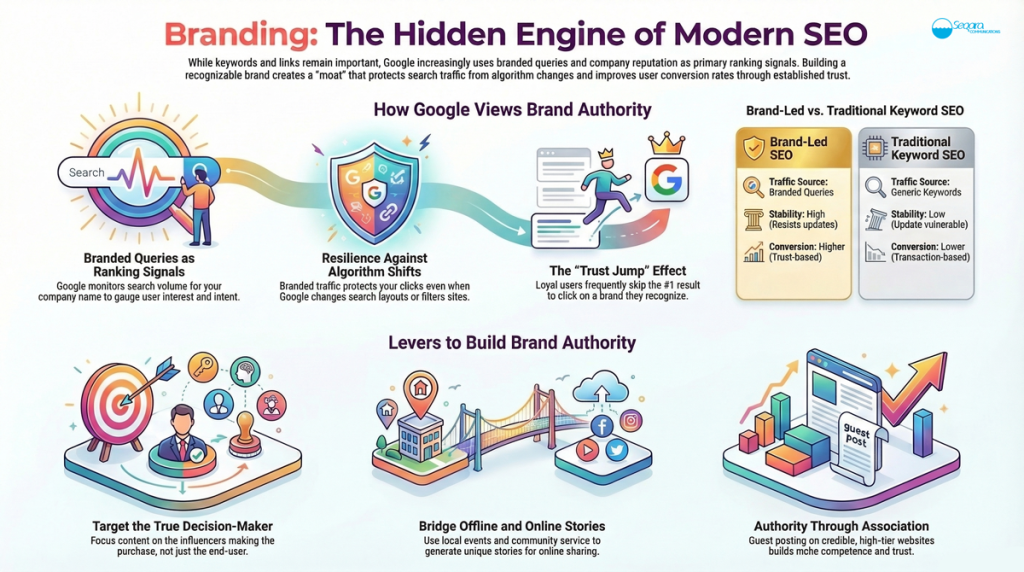
In the eyes of the algorithm, a “branded query”—a search that specifically includes your company name—is the ultimate signal of authority. Google monitors the volume of people actively looking for a specific entity to determine what users actually want to see. This isn’t just a vanity metric; it is a verification mechanism. Google uses these queries to verify whether a business actually deserves its ranking for broader industry terms.
However, brand value isn’t a simple shortcut. It is a nuanced signal that informs the algorithm about intent and relevance.
“Such giants, as GM or BMW, both will have lots of inbound links. Or if a Coca-Cola brand is more expensive than a Pepsi brand, this doesn’t mean that the first one will rank higher.”
The point isn’t that a higher price tag or a “premium” feel wins the day; rather, Google uses the sheer volume of intent-driven branded searches to verify which player in the niche holds the most trust.
3. Takeaway 2: The “Brand Skip”—Why Users Ignore the Top Ranking
The Power of Recognition Over Placement
Traditional SEO logic dictates that the #1 organic position is the only goal. However, “Brand Skip” behavior is proving that placement isn’t everything. Users frequently bypass the top-ranking result to click on a brand they recognize further down the page. This emotional and physical loyalty to a known entity overrides the search engine’s technical recommendation.
From a strategic perspective, this is the ultimate de-commoditization of a business. When users are willing to skip the top result—and potentially even pay more—to engage with your brand, you have effectively reduced your price sensitivity. Brand recognition is powerful enough to make a user put in more effort to find your specific site rather than settling for the generic answer at the top of the list.
4. Takeaway 3: Branding as the Ultimate SEO Insurance Policy
Algorithm volatility is the constant threat to any digital strategy. Relying solely on keyword rankings is a “knife to a gunfight” scenario. The source material is clear: SEO strength does not come from brand alone. Branding is a powerful lever, but it must be part of a larger arsenal of technical SEO. You need both to compete at the highest level.
However, branding serves as your diversification strategy. By building a brand, you become less sensitive to SERP feature changes and algorithm filters. If a search engine update filters out certain generic keywords, your branded traffic acts as a moat. It provides a consistent stream of clicks and conversions that technical shifts cannot easily take away.
5. Takeaway 4: The “Invisible” Decision Maker—Targeting the Right Audience
A common strategic failure is focusing marketing efforts on the end-consumer rather than the person with the buying power. In the assisted living industry, for example, the primary searcher is rarely the senior; it is the “adult child.”
By shifting your brand focus to address the logistical questions and emotional concerns of the adult children, you build relevance in Google’s eyes. When your content speaks directly to the decision-maker, your site becomes the most authoritative answer for that demographic’s specific intent.
——————————————————————————–
Strategy Shift: Targeting Decision-Makers
- Identify the Real Buyer: Focus on the person holding the “buying power” (e.g., the children of seniors).
- Solve Logistical Pain Points: Build trust by answering the specific, high-stakes questions that decision-makers face.
- Signal Intent Relevance: Use targeted branding to show Google your site is the specific destination for a high-intent audience segment.
——————————————————————————–
6. Takeaway 5: Why Your “Offline” Life is Your Best SEO Asset
A brand is more than a logo or a slogan; it is the “experience your customers have learned with your business.” It is how you make them feel about your services. Surprisingly, the most effective way to build online authority is through offline engagement.
When your business participates in local events, community service, or initiatives like meal deliveries to seniors, you create stories that resonate. Sharing these “offline” stories via blog posts, social media, and press releases creates a positive image that search engines interpret as a signal of a legitimate, trusted brand. Your offline reputation is the fuel for your online engagement.
7. Takeaway 6: Measuring the Intangible
While brand awareness can seem abstract, it must be tracked with the same rigor as any other KPI. Google Analytics provides the necessary data to determine if your reputation management is actually working.
To measure the effectiveness of your brand authority, you must monitor these three metrics:
- Brand Terms: The volume of people entering your site via searches for your specific company name.
- Browser Bookmarks: The number of users who have saved your site and return directly.
- SEO Clicks and Conversions per Page: Tracking how well your pages turn search traffic into actual business results over specific periods.
8. Conclusion: The Future of Search is Identity
The evidence is undeniable: brand awareness is not an “extra” for your SEO—it is a fundamental pillar. By building a recognizable identity, you earn a level of authority that technical optimization alone cannot replicate.
As you audit your digital presence, ask yourself the hard question: Are you merely building a website, or are you building a brand? In an era increasingly defined by AI and automated content, identity is the only thing Google can’t hallucinate. Stand out by becoming the brand that users—and algorithms—already know and trust.
Writer: Aditya Wardhana