
5 Reasons You Should Use Media Monitoring (Simple Guide)
Staying on top of what people say about you online isn’t a nice-to-have—it’s a must. Media monitoring helps you track brand mentions, spot trends, and act fast when something big happens. With real-time insights, you can make smarter decisions and adjust your strategy before small ripples turn into waves. Here are five simple according to SEQARA Communications, practical reasons to make media monitoring part of your daily work.
1) Build Better PR Strategies
Media monitoring shows you how your brand is perceived and which channels matter most. With that clarity, you can:
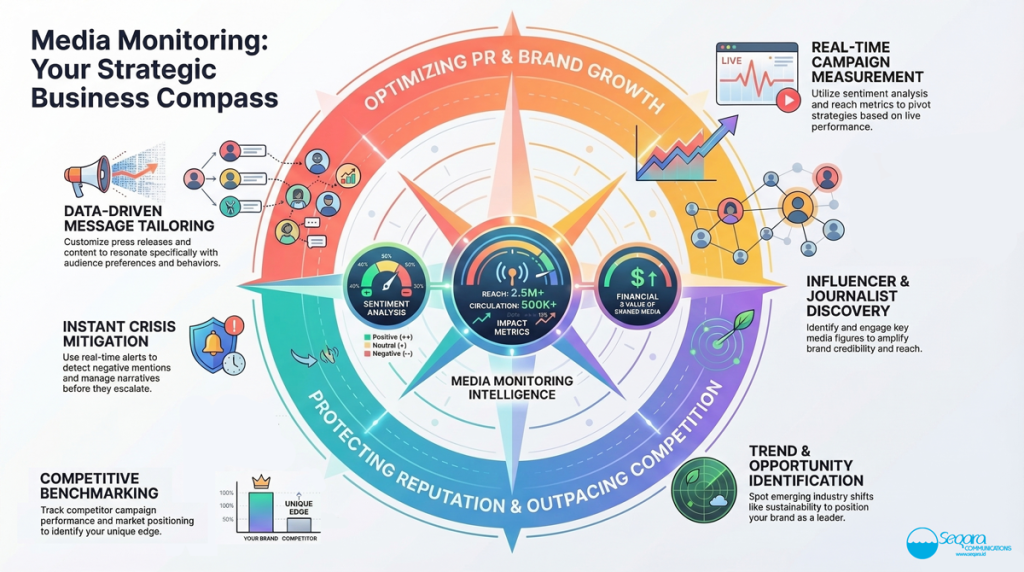
- Tailor your messages: Shape press releases and updates to match what audiences actually care about. Use insights from multiple channels to see sentiment and topics that gain traction.
- Find the right journalists and influencers: Identify who covers your space and engage them with relevant, timely pitches. Their reach and credibility can amplify your story.
- Understand your audience: See what they read, share, and comment on. Use analytics reports to refine tone, timing, and topics so your outreach lands.
My inner checklist: right story, right person, right moment—that’s what monitoring enables.
2) Stay Ahead with Competitive Analysis
Knowing your rivals helps you move faster and smarter. Media monitoring lets you:
- Track campaign performance: Compare engagement and coverage. Benchmark your results and spot gaps.
- Map market positioning: See how competitors frame their value, audiences they target, and narratives that resonate.
- React to changes first: Get alerts about new features, promos, leadership moves, and media coverage within minutes.
Practical move: use a simple SWOT from monitoring data, then update your plan. Small weekly tweaks beat big yearly pivots.
3) Prevent Crises and Protect Reputation
Bad news can spread fast. Monitoring helps you catch issues early and respond with confidence:
- Real-time alerts: Spot negative mentions quickly to correct facts and control the narrative.
- Swift, coordinated responses: Prepare playbooks with owners, draft statements, and approved channels.
- Coverage and sentiment tracking: See how stories travel and adjust messaging in the moment.
- Customer risk signals: Watch feedback patterns so you can fix root causes before they escalate.
Handled well, a crisis can become proof of your reliability. Speed, clarity, and empathy win.
4) Measure What Matters in Your Campaigns
If you can’t measure it, you can’t improve it. Monitoring gives you the data to steer your work:
- Sentiment analysis: Understand whether coverage is positive, negative, or neutral—and why.
- Social listening: Track conversation volume, themes, and influencers shaping opinion.
- Adjust on the fly: Iterate messages, channels, or creative based on real-time feedback.
- Reports and dashboards: Review mentions, reach, circulation, AVE, GRP, and key themes to assess impact and ROI.
Use the metrics, but keep the story. Data informs; your strategy decides.
5) Spot Industry and Market Trends Early
Trends shift fast. Monitoring helps you stay relevant and lead the conversation:
- Identify new opportunities: When interest grows around a topic—like sustainability—align your messaging and proof points.
- Adapt your strategy quickly: Pivot to formats and channels the audience prefers (for example, webinars over in-person events).
- Deep-dive analysis: Combine monitoring with market research to understand shifts in behavior and tech.
Pro tip: keep a living “signal log” of weak signals and test small pilots based on what you see.
Final Takeaway
Media monitoring isn’t just another tool—it’s the lens that keeps your communication sharp. Use it to shape smarter PR, outmaneuver competitors, manage crises, prove impact, and ride the right trends. Start simple: set alerts, track core metrics, and review weekly. The compounding gains will do the rest.

Writer: Aditya Wardhana