
Five Moments When PR Isn’t Optional (And How to Make It Work for You)

Public relations (PR) isn’t just a line item on a marketing budget—it’s the connective tissue between what you do and what people believe about you. When it’s activated at the right moment, PR can shift perception, open doors to new audiences, and steady the ship when waters get choppy. From scrappy nonprofits to global brands, SEQARA Communications have seen five situations where PR moves from “nice to have” to “non‑negotiable.”
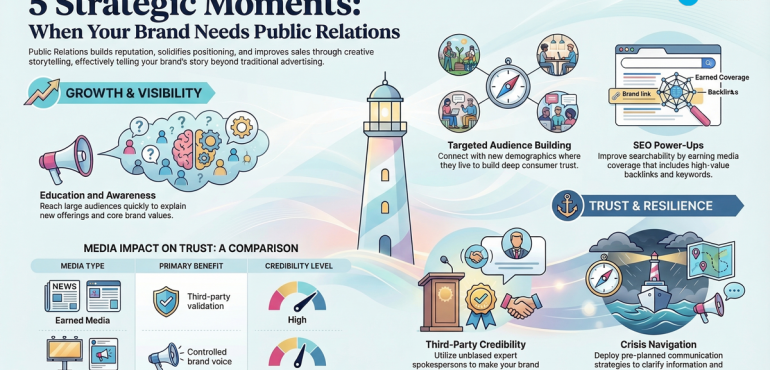
1. When you need to educate and raise awareness
Helping people understand a product, service, or issue takes more than a press release. It’s about clarity, consistency, and context. PR excels here because it pairs storytelling with distribution:
- Explain the what, why, and why now of your offering in language your audience actually uses.
- Use media relations to scale that message—newsrooms, newsletters, podcasts, and niche outlets your audience already trusts.
- Spotlight your differentiators so people can instantly grasp how you solve their problem.
- Keep loyalists engaged; it’s cheaper and faster to deepen existing relationships than to build new ones from scratch.
The payoff: a shared understanding of your value and a steady drumbeat of mentions that keep your brand top‑of‑mind.
2. When a crisis hits
If you’re building a response plan during a crisis, you’re already behind. A strong PR function prepares before headlines break and leads calmly when they do:
- Stand up a crisis playbook with roles, messages, and approval paths.
- Anchor every statement in your values and verifiable facts.
- Correct rumors quickly; silence gets filled with speculation.
- Keep a two‑way line open with media, customers, employees, and partners.
Positive, transparent communication doesn’t erase a crisis, but it can preserve trust and shorten the recovery curve.
3. When credibility will decide the outcome
Audiences know when they’re hearing a sales pitch. Earned media cuts through because third‑party voices—journalists, analysts, researchers, category experts, and real customers—bring editorial rigor and social proof:
- Offer subject‑matter experts for interviews instead of brand spokespeople only.
- Share data, case studies, and access that help reporters tell the story independently.
- Favor plain English over buzzwords; credibility thrives on clarity.
When respected outsiders echo your message, it stops sounding like hype and starts reading like fact.
4. When you’re building (or refreshing) your audience
Great brands grow by meeting new people in the places they already spend time. PR helps you find and reach them efficiently:
- Map your priority audiences and the channels they trust—from vertical trades to community radio to creator‑led newsletters.
- Pitch tailored story angles to each segment instead of blasting the same message everywhere.
- Use owned and shared content to reinforce momentum sparked by earned placements.
The result is reach with relevance—wider exposure without watering down your story.
5. When you want to improve SEO without gaming the system
Search performance rewards authority and relevance. Thoughtful PR does both:
- Earned coverage from reputable outlets often includes backlinks and keyword‑rich context.
- Consistent mentions across authoritative sites signal credibility to search engines.
- Expert commentary and bylines build your entity footprint, which supports long‑term discoverability.
PR won’t replace technical SEO (search engine optimization), but together they compound: every quality mention is both awareness and an algorithmic nudge. Even now PR must also learn to quickly adopt GEO (generative engine optimization).
Putting it all together
PR is one of the most efficient ways to turn business strategy into belief. Use it to explain what matters, navigate the hard moments, borrow trust from credible voices, meet new audiences, and strengthen search visibility. When it’s planned with intention and executed with empathy, PR doesn’t just tell your story—it makes people care about it.

Writer: Aditya Wardhana