
Chasing the Scoop: The Best Movies About Journalists and the Stories They Risk Everything to Tell
Introduction
Have you ever paused a film and thought, “Wait—journalists really live like this?” Sometimes yes, sometimes wildly no. But that tension is exactly why movies about reporters are so irresistible. They show modern hunters in sneakers and press badges, racing after truth, crafting words or capturing video, and trying—against deadlines, bosses, and danger—to make sense of the world. Below, I trace a lively lineup of top films about journalists and newsroom life, spanning glossy comedies, hard-nosed procedurals, and chilling thrillers. Some depictions stretch the truth; others hold it tenderly to the light. All are worth your time.
Spider-Man (2002)
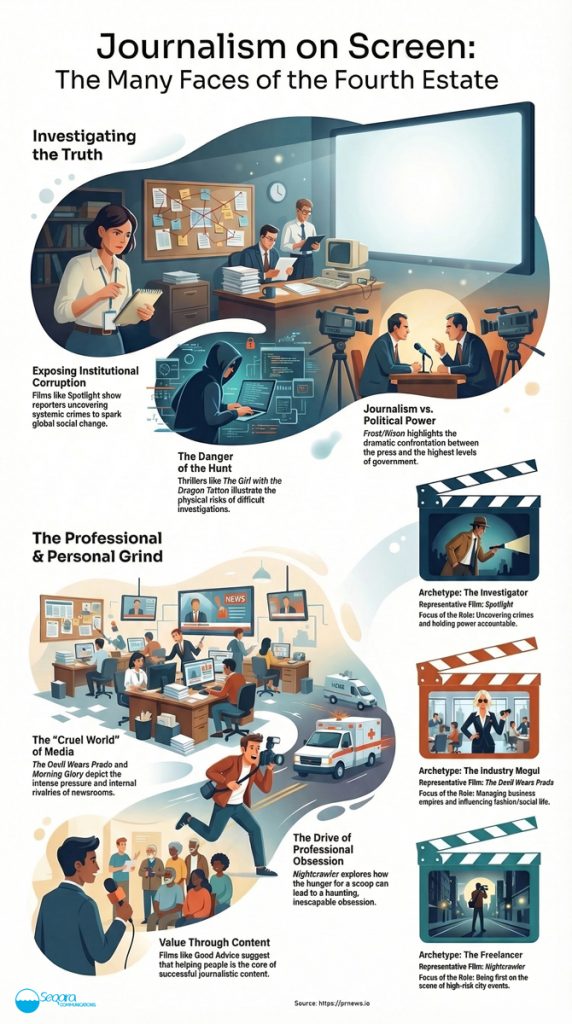
Peter Parker might not be Woodward or Bernstein, but he is a hustling freelance photojournalist—one who literally manufactures his own front-page subject. The movie playfully skewers the ethics of access and the seduction of stardom while reminding us that images shape the news as much as words do. It’s pulp, sure, but it taps a real dilemma: when proximity becomes complicity.
The Devil Wears Prada (2006)
Fashion journalism is still journalism. Through Miranda Priestly’s frostbitten empire and Andy’s baptism by fire, we glimpse how editorial power shapes culture, careers, and the public imagination. Behind immaculate covers lie brutal calendars, impossible standards, and the unwritten rules of gatekeeping. The office politics are heightened, but the pressure feels painfully true.
The Girl with the Dragon Tattoo (2011)
Investigative reporter Mikael Blomkvist partners with hacker savant Lisbeth Salander to exhume a long-buried disappearance. What follows blends methodical reporting with moral hazard: sources who lie, archives that mislead, and institutions that prefer silence. The film captures the grind of verification and the fear that the truth might stare back, unblinking.
Nightcrawler (2014)
Lou Bloom discovers the lucrative, queasy world of freelance crime videography. With a police scanner and a predator’s patience, he turns human suffering into ratings gold. It’s a neon-noir sermon about the market incentives that warp news judgment and the ethical cliff-edge of “If it bleeds, it leads.” Terrifying—and brilliantly acted.
Morning Glory (2010)
Morning television looks sunny on-screen; off-screen it’s cloudbursts of clashing egos, cratering ratings, and frantic production sprints. This newsroom comedy peels back the curtain on rundown meetings, impossible segments, and the alchemy of turning chaos into a coherent, congenial broadcast before most viewers finish their first coffee.
How to Lose a Guy in 10 Days (2003)
Assignment journalism meets rom-com mischief. A lifestyle writer treats dating as a case study for a splashy feature while her counterpart runs his own experiment. It’s light, fizzy, and winks at an enduring newsroom truth: clever framing can be irresistible—but manipulating real people comes with consequences.
Good Advice (2001)
A down-on-his-luck columnist stumbles into a wildly popular advice gig. The setup is comedic, but it nods to a core newsroom axiom: audiences reward clarity, empathy, and usefulness. Great service journalism doesn’t care who you are; it cares whether you can help.
Spotlight (2015)
Procedural perfection. Following The Boston Globe’s investigative team, the film honors the unglamorous craft: phone calls that go nowhere, spreadsheets that finally sing, editors who protect their reporters, and the slow, relentless build toward accountability. It’s a master class in verification and courage.
Good Night, and Good Luck (2005)
Shot in silvery black-and-white, George Clooney’s chronicle of Edward R. Murrow’s challenge to McCarthyism is both time capsule and warning flare. It celebrates the public-service soul of journalism: skepticism wielded responsibly, truth spoken plainly, and airtime spent on what matters rather than what merely entertains.
Zodiac (2007)
David Fincher turns obsession into a workflow. Reporters and cartoonists become detectives, chasing patterns through contradictory evidence and dead-end tips. The movie understands how uncertainty corrodes morale—and how, sometimes, the pursuit itself becomes the story.
Frost/Nixon (2008)
A television interview as gladiatorial sport. David Frost’s jousts with former President Richard Nixon are a clinic in preparation, pressure, and the delicate dance of access journalism. When accountability finally cracks through charisma, it’s journalism doing democracy’s hard housekeeping.
An Interview with God (2018)
Here, the big question isn’t “What happened?” but “What does it mean?” A war-scarred reporter sits down with a man who claims to be God, and suddenly faith, doubt, and purpose become the beats to cover. It’s a parable about vocation: who am I when the story stares into my soul?
The Newsroom (2012)
Not a film but a series worth the honorary slot. Aaron Sorkin’s bullpen banter romanticizes, critiques, and autopsies a prime-time news operation grappling with real-world stories. It’s idealistic, yes, but also granular about standards, sourcing, and the bruising collisions between truth, timeliness, and ratings.
Why These Stories Matter
- Journalism is a public service, not just a plot device. These titles dramatize the friction between ethics and ambition, speed and accuracy, empathy and exploitation.
- They reveal the human cost: missed holidays, frayed marriages, secondary trauma, and the lonely courage of phoning one more source at midnight.
- They argue for craft. Good reporting is systems thinking: hypotheses, verification, iteration, and humility when facts defy the pitch.
A Few More to Queue Up
- All the President’s Men (1976): The template for investigative cinema and source protection.
- Shattered Glass (2003): A cautionary tale about fabrication and newsroom safeguards.
- The Post (2017): Publishing in the public interest under legal and political fire.
Closing Thoughts
If these films share a thesis, it’s simple: truth doesn’t reveal itself; someone has to go find it. Sometimes that someone wears Prada. Sometimes they carry a police scanner, or a press pass with coffee stains. Either way, the chase is the point—and the public is the beneficiary.

Writer: Aditya Wardhana