
Beyond Good Intentions: How CSR Supercharges Public Relations
Introduction: Why CSR and PR Belong Together
When corporate social responsibility (CSR) and public relations (PR) operate in sync, they do more than polish a brand—they create resilient relationships, measurable value, and long-term trust. CSR gives PR authentic substance; PR gives CSR the narrative, reach, and stakeholder engagement it deserves. Together, they form a feedback loop that strengthens reputation and drives behavior—from customer loyalty to talent attraction and investor confidence.
1. Improved Public Image
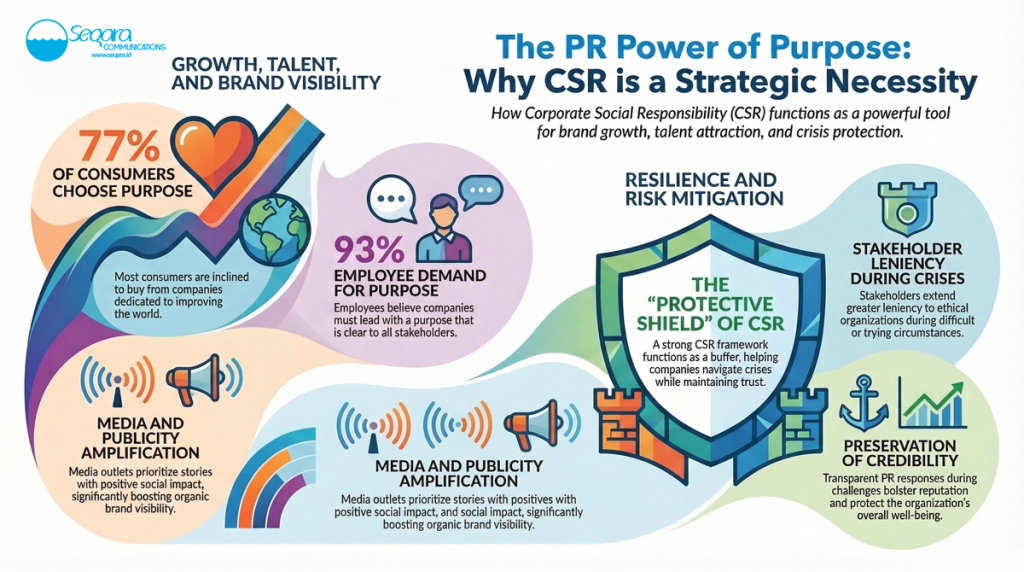
A visible, credible CSR program shapes how people see a company. Research such as Alfac’s finding—that 77% of consumers prefer to buy from companies committed to improving the world—signals that purpose now influences purchase behavior. By backing words with verifiable action, companies stand apart from competitors and earn recognition as responsible, ethical actors. The payoff is compounding: positive sentiment fuels trust, trust fuels loyalty, and loyalty encourages advocacy.
- Align CSR themes with core business strengths to avoid “random acts of charity.”
- Report progress with clear metrics and independent validation to enhance credibility.
- Invite stakeholder input to keep initiatives relevant and responsive.
2. Employee Beliefs and Engagement
CSR doesn’t just face outward; it powers culture. Employees increasingly expect employers to lead with purpose—93% say companies must do so. When CSR is embedded in strategy, it becomes a magnet for talent and a reason for people to stay. Belief turns into behavior: employees who truly identify with their company’s initiatives volunteer, share stories, and advocate for the brand, extending the reach—and the authenticity—of PR efforts.
- Tie CSR objectives to performance goals to reinforce accountability.
- Offer paid volunteer time and skills-based service to deepen impact.
- Activate employee storytelling through internal channels and social platforms.
3. Media Coverage and Publicity
Newsrooms favor stories that combine evidence, human impact, and scale. Well-designed CSR programs check all three boxes, attracting coverage that elevates brand visibility and credibility. This earned attention can ripple through the stakeholder ecosystem—strengthening investor relations, appealing to socially conscious customers, and giving the company a competitive edge.
- Pitch data plus narrative: pair measurable outcomes with real beneficiary voices.
- Time communications to relevant news cycles, policy moments, or awareness days.
- Share assets (photos, short video, executive quotes) to make coverage effortless.
4. Crisis Management and Risk Mitigation
A robust CSR foundation creates reputational resilience. When organizations consistently uphold ethical standards and social commitments, stakeholders are more inclined to extend grace in turbulent moments. Effective crisis PR—rooted in transparency, timely action, and responsible remediation—can turn a potential flashpoint into proof of values in action, preserving trust and competitive standing.
- Pre-plan: map likely risks, spokespeople, and escalation paths.
- Communicate what happened, what you’re doing now, and how you’ll prevent recurrence.
- Close the loop publicly with follow-up reporting and third-party verification.
Making Integration Work: Practical Next Steps
- Diagnose material issues: conduct a double materiality assessment to focus on the most impactful topics for society and the business.
- Set targets and KPIs: define outcomes, not just activities (e.g., emissions intensity, community livelihoods, supplier compliance). Use SMART goals and disclose progress regularly.
- Build cross-functional governance: involve sustainability, communications, HR, legal, supply chain, and finance to ensure integrity and speed.
- Choose frameworks: align reporting with recognized standards (e.g., GRI, SASB, TCFD) and consider assurance for key metrics.
- Measure reputation lift: track brand equity, trust, employee engagement, and earned media value to quantify ROI (Return on Investment).
Conclusion: Trust Is the Ultimate KPI
CSR and PR aren’t parallel tracks; they’re interdependent systems. When purpose is real and performance is measurable, PR becomes a multiplier—amplifying impact, attracting allies, and insulating against shocks. In a crowded marketplace, trust isn’t just a feel-good outcome; it’s the ultimate KPI that sustains growth and secures a durable license to operate.

Writer: Aditya Wardhana