
Clear Skies, Clear Messages: How Indonesian Airlines Are Rewriting Crisis Communication for 2025–2026
We’ve watched Indonesian aviation weather turbulence both literal and reputational. From fatal accidents to fare controversies, the sector’s survival has often hinged less on the incident itself and more on the speed, clarity, and credibility of its messaging. In 2025–2026, SEQARA Communications see airlines moving from damage control to foresight: proactive passenger care, operational transparency amid regional conflicts, and digital-first communication that treats time as the defining currency of trust.
The Evolution of Crisis Playbooks
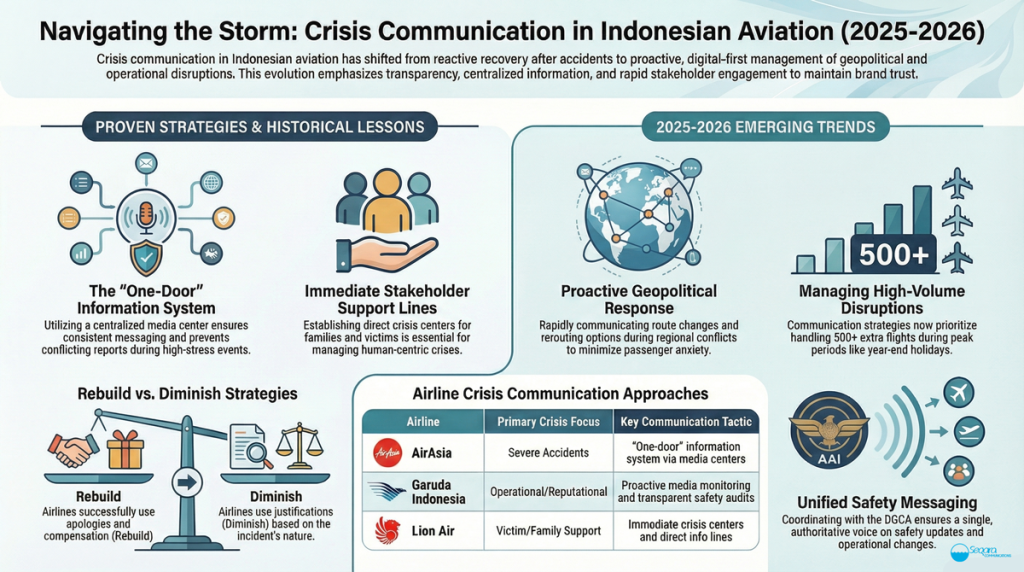
Indonesia’s carriers have learned—sometimes the hard way—that a crisis is a communications stress test. The contrast between airlines that stabilized their reputations and those that faltered (Adam Air being the cautionary tale) underscores one truth: when information is scarce, rumor fills the runway. Today’s best practice centers on three pillars: act fast, centralize facts, and put a credible human face in front of the story.
Case Files: Lessons Written in Real Time
- Sriwijaya Air (SJ-182, 2021): After the crash, the airline leaned heavily on social media to steer narratives. Yet, the intermittent presence of visible leadership during critical windows weakened message authority. The result: efforts landed, but didn’t fully reassure.
- AirAsia (QZ8501): The standout was the “one-door” media center—single source, single standard, single cadence. That structure, paired with swift actions, preserved corporate image under intense global scrutiny.
- Garuda Indonesia: From the Yogyakarta Boeing 737-400 accident to fare-price flare‑ups, Garuda’s playbook blends vigilant media monitoring with rapid press releases. When defending on price, it sometimes shifted to a more guarded, defensive stance to protect brand equity.
- Lion Air (JT610): Rapid activation of a crisis center and direct hotlines for families set the right tone. The harder battle was the fog of misinformation—real and fabricated content that demanded fast, factual rebuttals to protect stakeholder confidence.
Across these cases, airlines toggled between Rebuild strategies (apologies, compensation) and Diminish strategies (context, justification). Social platforms—especially X and Instagram—have become the runway for first response and stakeholder dialogue. What endures: speed, a single door for information, and a named spokesperson who shows up consistently.
What’s Different in 2025–2026
- Geopolitical turbulence: Following early‑2026 Middle East conflicts, carriers prioritized instant clarity around reroutes, cancellations, and alternative itineraries, with messaging wired to operations in near-real time.
- Proactive passenger management: Digital self-service—status pushes, rebooking, refunds—now leads. Anxiety drops when passengers can act, not just wait.
- Anticipatory briefings: Teams identify likely choke points (weather, crew, aircraft rotations) before they break, staging templated updates and FAQs to shorten reaction times.
- Unified safety lines: PR syncs tightly with the Directorate General of Civil Aviation (DGCA), ensuring one, consistent safety message across operators.
- Peak-season orchestration: Year-end holidays and the Hajj uplift strain networks by hundreds of extra flights. The play: pre-announce load expectations, publish delay-management protocols, and reinforce service recovery standards.
2025–2026 Case Studies
- Garuda Indonesia: Through mid‑2025 and early‑2026, Garuda communicated resumption of select international routes (e.g., Jakarta–Doha) with disciplined transparency—signposting safety audits and coordination with international regulators to frame decisions as data-driven.
- Citilink: As fleet utilization tightened in late‑2025, messaging focused on operational reliability—explaining schedule adjustments, setting clear expectations, and clarifying recovery timelines.
- Foreign operators (Qatar Airways): Travel agencies praised its proactive options during 2025 disruptions—flexible refunds and rescheduling with multi-channel updates—raising the bar for service recovery in the Indonesian market.
Emerging Risk Map
- Regional instability: Dynamic flight-path assessments near conflict zones demand swift passenger alerts and simple, visual reroute explanations.
- Network complexity: Surge demand plus aging infrastructure raise the odds of cascading delays. Communications must isolate issues, explain trade-offs, and prevent a local snag from becoming a national story.
- Cyber and data exposure: With digital-first operations, crisis plans now require cyber playbooks—credential resets, segmented updates for affected cohorts, and regulatory-ready disclosures.
The Modern Toolkit
- One-door information hub: A live microsite or pinned platform thread that anchors every statement, timestamped and searchable.
- Designated spokesperson bench: Primary and alternates trained for high-stress delivery, with bilingual capability and media rehearsal.
- Passenger-first automation: Push alerts by PNR, in‑app self-service for refunds and rebookings, and auto-generated proof of disruption for insurance and employers.
- Hoax response cell: Social listening plus verification posts, myth-busting cards, and partnerships with platforms to throttle virality.
- Data dashboards: Public ETAs on recovery (crew, aircraft, gate availability) that convert operational complexity into understandable milestones.
Playbook: First 24 Hours
- Confirm facts with operations and DGCA; publish an initial holding statement within 15 minutes.
- Activate the one-door hub; assign a spokesperson; schedule rolling updates every 30–60 minutes.
- Stand up hotlines and direct messaging for affected passengers and families; publish service-recovery entitlements.
- Map misinformation; issue corrections with visual proofs; escalate takedown requests for harmful fakes.
- Brief employees first; equip them with Q&As and escalation paths.
- Log decisions and timestamps for regulatory and legal scrutiny.
Metrics That Matter
- Time to first statement, first passenger alert, and first live briefing
- Percentage of affected passengers receiving actionable options in under 30 minutes
- Accuracy score across updates (retractions avoided, consistency maintained)
- Misinformation detection-to-correction window
- NPS/CSAT deltas for disrupted passengers within seven days
From Reaction to Resilience
Indonesia’s airlines aren’t just improving their tone; they’re rebuilding the communication architecture around speed, clarity, and empathy. The north star is simple: earn time, earn trust. When passengers see transparent choices and hear one steady voice, even turbulent skies feel navigable.
Conclusion: The New Frontier of Aviation Trust
As we progress through 2026, the challenges facing Indonesian aviation are increasingly sophisticated. Beyond the traditional focus on physical safety, airlines must now fortify their communication strategies against cyber-enabled threats and passenger data concerns. These invisible crises will test the industry’s resilience in ways a mechanical failure never could.
In an era where information travels faster than a jet engine’s intake, transparency is the only sustainable currency. When you book your next flight, the critical question is no longer just about the age of the fleet, but about the integrity of the information: Do you value an airline’s historical safety record more, or the transparency and speed with which they tell you the truth when things go wrong?

Writer: Aditya Wardhana